
Last Updated on December 16, 2014 by admin
The Department of Agricultural Extension and Rural Development (AERD), has held a Valedictory Lecture for its outgoing final year students, which is the first ever to be held. The maiden edition of the Lecture themed, “Becoming Employable in an Unemploying Economy”, had as speakers, an alumnus of the Department and current Manager of Stanbic-IBTC, Abeokuta Main Branch, Mr. Sola Fagbuyi, as well as Dr. Adebosola Oladeinde, the Deputy Director of Cassava: Adding Value for Africa II (C:AVA II) project.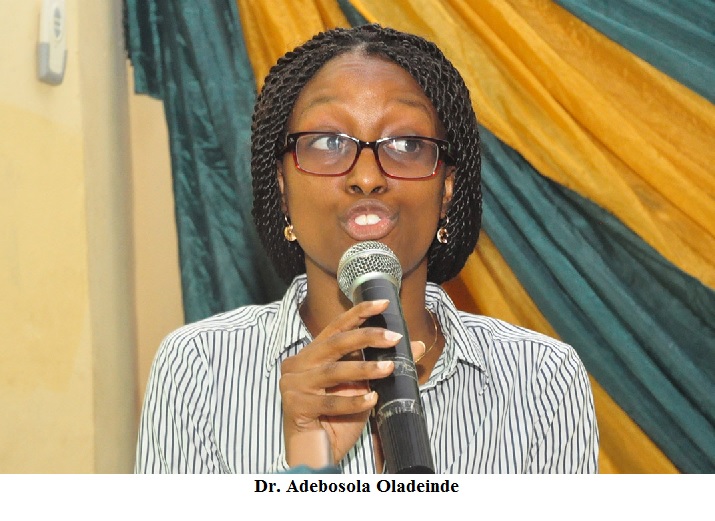
According to Mr. Fagbuyi, there is the growing incidence of unemployment among youths in the country, saying that so many people were roaming the streets without doing anything. Admonishing the students not to be among the unemployed, he disclosed that “it is the value you add to yourselves now that would give you opportunities in the future”. He noted that the statistics emanating from both the Manpower Board and the Federal Bureau of Statistics, showed that Nigeria had a youth population of 80 million, representing 60 per cent of the total population of the country, out of which 64 million were unemployed, while 1.6 million were underemployed, as he described employability as the ability to obtain, maintain and switch employment over time, adding that before someone seeks for employment, it would be good to first find out if one is employable or not. He said those that were unemployed in the nation can be grouped into two categories: those that were unemployed due to retrenchment, redundancy or bankruptcy, as well as those that had never been employed.
“Employability consists of numerous components or skills, such as technical, non-technical, transferable, non-transferable, context dependent, context independent and meta-cognitive”, he stated. banker said that although, unemployment was a worldwide problem, he advised students to be adequately prepared for the future in order to mitigate the challenge of unemployment by constantly practicing what they were taught in the University.
In her presentation, Dr. Adebosola Oladeinde, said that money was not everything as young graduates could engage in volunteering, mentorship and internship programmes, to attain success in life. She stated that though social media was good, employers had been known to search for candidates’ profiles on Facebook and other social media platforms before inviting them for interview, warning students to be wary of what they posted on such platform. According to her, “unless you set up your privacy settings appropriately, almost anyone can find you. If your friends write or post inappropriate things on your account, it will be seen as a representation of you”. Dr. Oladeinde said that it was good to usually use the Google package to check someone’s status on the Internet, to keep track of comments made about one’s personality. Earlier, the Acting Head, Department of Agricultural Extension and Rural Development, Dr. Eniola Fabusoro, said that the lecture was organised in a bid to produce quality students that would be well-prepared for the employment world and to also complement their academic programmes.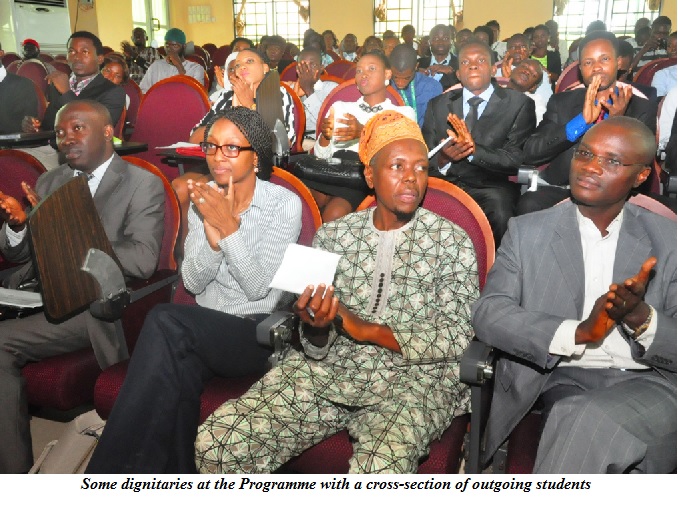
The Director of Grants Management (DGM), Dr. Kolawole Adebayo, said he hoped that the students would have gained one or two things during the lecture that would be valuable to them in future. He added that the lecture was really not for those seeking employment alone, but for those who would be job-creators as well. He disclosed that the mission of FUNAAB, as a University, was to produce graduates that will rather be job-creators and not job-seekers. His words, “we need people to create employment because people who employ enjoy more than those who are employed”. Dr. Adebayo, who is also the Project Manager of C: AVA II project, noted that despite the several fundamental problems facing the country, there was still a ray of hope, as he charged graduates to venture into areas like the recycling of ‘pure water’ nylon that littered everywhere, saying “you can start to collect and when it starts growing, you employ people to collect” and that there were many fantastic ideas for people to explore to becoming employers of labour.
