Last Updated on September 30, 2026 by Olasunkanmi Olajide
Beyond the Certificate: Why FUNAAB is Preparing a New Generation of Global Problem-Solvers
By Olasunkanmi Olajide & Joy Adeyiga
For the newly admitted students of the Federal University of Agriculture, Abeokuta (FUNAAB), the journey into higher education officially began with more than lectures, registration, matriculation and the anticipation of graduation. It began with a challenge: what would they make of the years that lie ahead?
At the University’s Career and Sensitisation Day for newly admitted students of the 2026/2027 Academic Session, the message was unmistakable a university education should not end with the collection of a certificate; it should produce individuals equipped with the knowledge, skills, character, creativity and confidence to solve problems and make meaningful contributions to society.
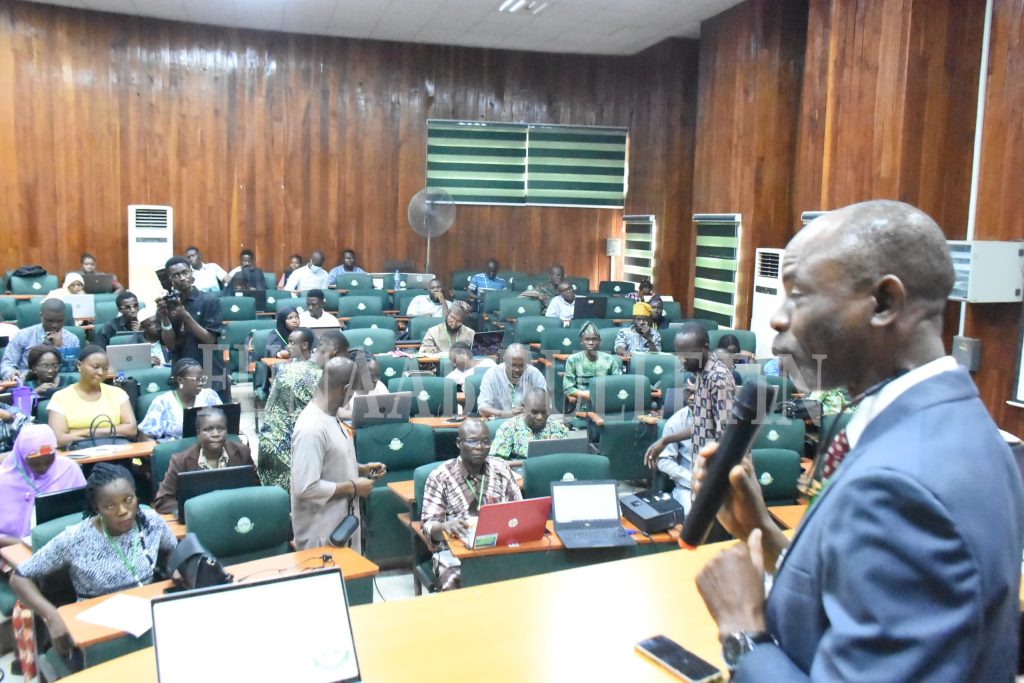
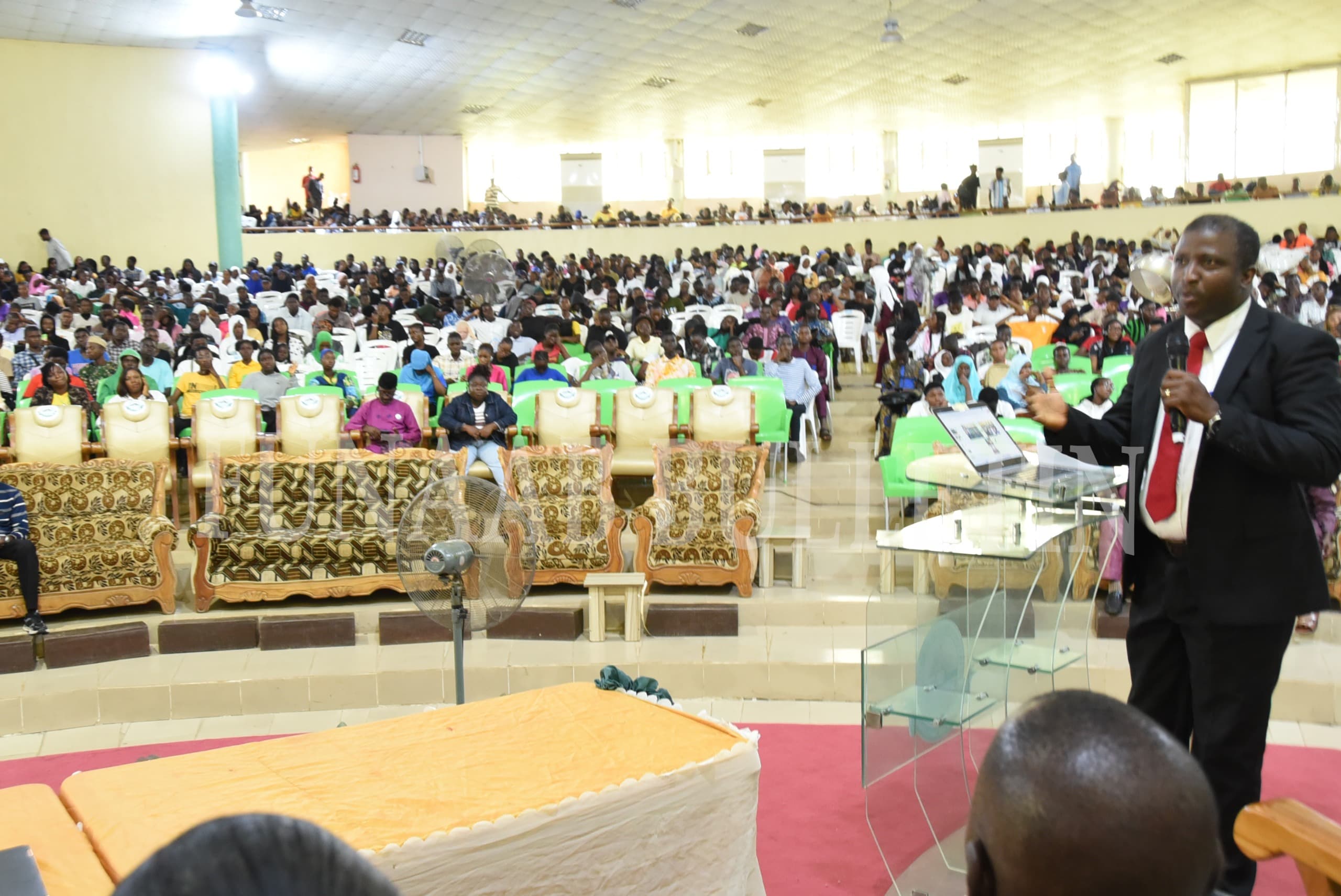
Delivering the lead presentation, “Goal Setting and Vision: Charting Your Path Through the University and Beyond,” Professor of Veterinary Anatomy and Member of FUNAAB’s Employability and Benchmarking Committee, Prof. Ayokunle Olude, challenged the fresh students to approach their university years with deliberate purpose.
“Your years here will count quickly; make them count,” Prof. Olude admonished the students at the Prof. Oluwafemi Balogun Ceremonial Building, urging them to dream boldly, define the persons they want to become and translate their aspirations into measurable goals.
His message captured a central reality of contemporary higher education: the value of a university is increasingly measured not only by the certificates it awards, but by the capacity of its graduates to create value in the workplace, advance knowledge, innovate, solve societal problems and compete in an interconnected global economy.
That philosophy is particularly significant at FUNAAB, an institution established with a specialised mandate in agriculture and allied disciplines, but which has evolved into a broad-based academic and research environment spanning Agriculture, Engineering, Veterinary Medicine, Natural and Applied Sciences, Management, Environmental Sciences and other complementary fields.
From its foundation, FUNAAB has operated at the intersection of knowledge, agriculture, science, technology, food security, environmental sustainability and human development. Its students therefore enter a learning environment where classroom instruction is complemented by practical exposure, research, entrepreneurship, innovation, professional development and engagement with industry and society.
For the fresh students, this wider ecosystem presents an opportunity to build much more than academic credentials.
Prof. Olude asked them to consider three fundamental questions: Who do I want to become in five or ten years? What problem do I want to help solve in my community or Nigeria? And what would make me proud when I graduate beyond the certificate?
The questions go to the heart of what higher education is expected to accomplish in the 21st Century, transforming young people from recipients of information into critical thinkers, skilled professionals, researchers, entrepreneurs, innovators and responsible citizens.
At FUNAAB, this transformation takes place within a University environment that combines teaching with research and community engagement. Its laboratories, farms, field facilities, academic programmes, professional partnerships, entrepreneurship initiatives, innovation platforms and research activities provide students with multiple pathways to connect theory with real-world challenges.
This is particularly relevant to agriculture, which today extends far beyond traditional farming. Food systems, climate change, biotechnology, artificial intelligence, agricultural engineering, animal health, environmental sustainability, agribusiness, food safety, digital agriculture and value-chain development are increasingly interconnected areas requiring multidisciplinary expertise.
Consequently, a FUNAAB graduate can emerge not simply as a Degree holder, but as part of a new generation of professionals positioned at the intersection of agriculture, science, technology and enterprise.
Prof. Olude reminded the students that such possibilities would not automatically translate into success. “Nobody will chase you. Your discipline is your advantage,” he said, urging them to take personal responsibility for their academic and professional development.
He introduced the students to the SMART approach to goal-setting, ensuring that objectives are Specific, Measurable, Achievable, Relevant and Time-bound and demonstrated how broad ambitions could be transformed into practical targets. According to him, a student aspiring to achieve a CGPA of at least 4.50, for instance, would need to translate that ambition into consistent study, attendance, engagement, revision and performance-monitoring habits.
His emphasis on habits was particularly instructive. “Daily habits are where vision becomes reality,” he noted, explaining that consistent academic effort is more sustainable than attempting to compensate for months of inactivity during examination periods.
The same principle, he said, should extend beyond academics. Students were encouraged to develop competencies in computer literacy, public speaking, writing and digital communication while paying attention to financial management, health and wellbeing, character, leadership, relationships, career development and skills acquisition.
These competencies are increasingly important in a labour market where employers and organisations seek graduates capable of communicating effectively, adapting to changing technologies, collaborating across disciplines and applying knowledge to practical challenges.
The University’s emphasis on employability and benchmarking therefore adds another dimension to the student experience. The objective is not simply to prepare students to pass examinations, but to encourage them to understand the relationship between what they learn in the classroom and what the world outside the University demands.
For a University with a strong agricultural identity, that relationship is particularly strategic. Africa faces complex challenges around food production, nutrition, climate resilience, environmental management, rural development, animal health, water, energy and sustainable livelihoods. Addressing them requires a generation of highly trained professionals who can connect scientific knowledge with innovation, enterprise and public impact.
FUNAAB students are entering this space at a time when agriculture itself is becoming increasingly knowledge-intensive and technology-driven. The future of food production would depend on Scientists, Veterinarians, Engineers, Technologists, Economists, Environmental Specialists, Communicators, Entrepreneurs and Policymakers working across disciplinary boundaries.
That broader outlook reinforces the significance of the message delivered to the fresh students: their FUNAAB experience should be intentionally constructed rather than passively experienced.
Prof. Olude advised the students to divide their aspirations into long, medium and short-term goals, stressing that graduation, academic excellence and career development are achieved through smaller targets pursued consistently.
He also urged them to prepare for setbacks, including financial pressures, academic difficulties, distractions and periods of diminished motivation. His counsel was simple: remain “flexible in method, firm in purpose,” while seeking mentors, accountability partners and guidance from lecturers and regularly reviewing their progress.
The introduction of the vision-board concept further challenged the students to visualise their desired futures and connect their aspirations with concrete actions.
For a new student standing at the beginning of a four, five or six-year journey, that exercise carries an important message: the graduate who walks out of FUNAAB at the end of the journey would largely be shaped by the choices made during the journey.
Also speaking at the programme, Founder of African Young Brains, Dr. Femi Awoyomi, urged the students to remain committed to their studies and keep moving forward despite challenges. He encouraged them to embrace perseverance, consistency and determination while maximising the opportunities available to them.
The Career and Sensitisation Day thus served as more than a welcome programme for newly admitted students. It offered an early introduction to the philosophy behind a modern university education, academic knowledge reinforced by skills, discipline, innovation, entrepreneurship, research, leadership and service.
For FUNAAB, whose institutional identity is deeply connected to the future of agriculture and sustainable development, the significance is even broader. The University is educating young people at a time when Africa needs knowledge-driven solutions to some of its most pressing challenges.
Its graduates are consequently being prepared to occupy spaces across laboratories and farms, hospitals and industries, classrooms and research centres, technology companies and entrepreneurial ventures, government institutions and international organisations.
That is the larger story behind the charge to the fresh students to make their FUNAAB years count. The ultimate product of higher education is not the certificate alone, but the capability, character and impact that the certificate represents.
And as a new generation begins its journey at FUNAAB, the challenge is clear: Dream boldly. Plan carefully. Act consistently. Review regularly and leave the University prepared not merely to seek opportunities, but to create value wherever the world needs it.
#SDG4, #SDG8