
Last Updated on February 6, 2026 by Olasunkanmi Olajide
By Raymond Osemene
The Federal University of Agriculture, Abeokuta (FUNAAB), has highlighted the increasing relevance of bioinformatics in enhancing research quality, innovation, and global competitiveness, especially for universities seeking improved academic rankings.
This was stated at the Opening Ceremony of a One-Day Bioinformatics Training Programme for Academic staff, held today, February 4, 2025, at the 250-Capacity Computer Laboratory.
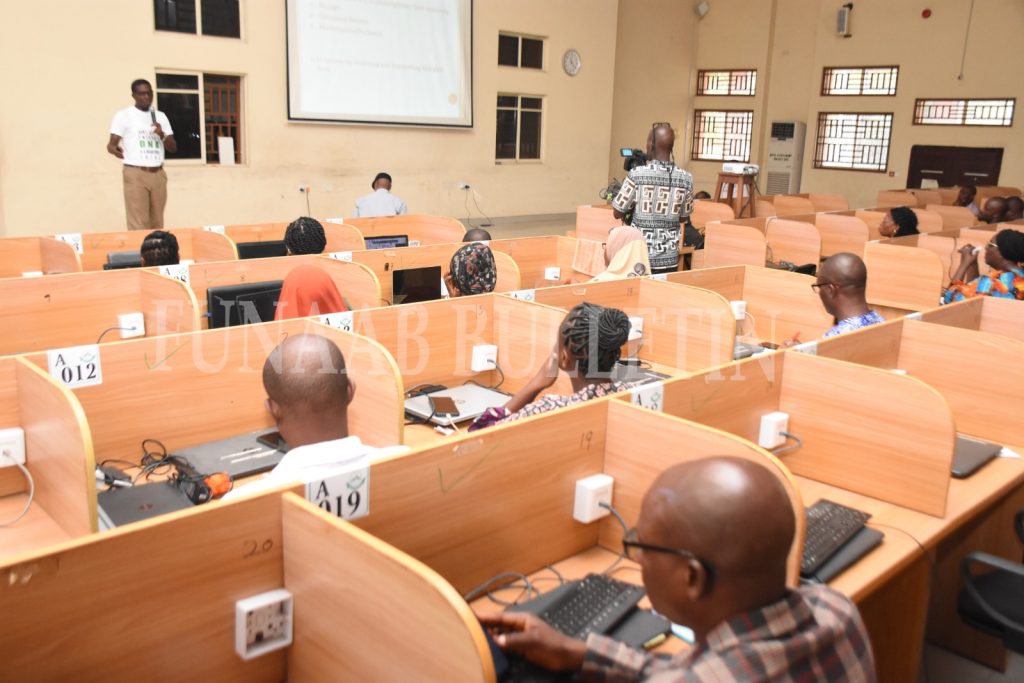
In his opening remarks, the Vice-Chancellor, Prof. Babatunde Kehinde, represented by the Deputy Vice-Chancellor (Academic), Prof. Olusegun Idowu, welcomed participants and described the programme as timely and impactful, noting that it would positively reshape participants’ research orientation in line with the objectives of bioinformatics.
He explained that bioinformatics has become indispensable in the current era of globalisation, with applications across agriculture, health sciences, and related fields, adding that its effective use was crucial for improving research output and international visibility.

Earlier, the Director, Directorate of Academic Information Systems (DACIS), Prof. Olusegun Folorunso, said the second series of the bioinformatics capacity workshop was designed to strengthen sustainable research skills, promote international collaboration, and encourage informed decision-making through scientific tools.
He added that the interactions and professional networks formed during the workshop, particularly among early-career researchers, would contribute significantly to academic growth and long-term professional development.
Delivering the lecture titled “Introduction to Bioinformatics,” the facilitator, Dr. Adeyemi Adenaike, described bioinformatics as a multidisciplinary field integrating Biology, Computer Science, Mathematics, and Statistics, with applications across Animal Science, Plant Science, Biochemistry, Microbiology, and Environmental Biology.
He noted that advances in sequencing technologies have led to an explosion of biological data, making computational tools essential and positioning bioinformatics as a foundation of modern life sciences.
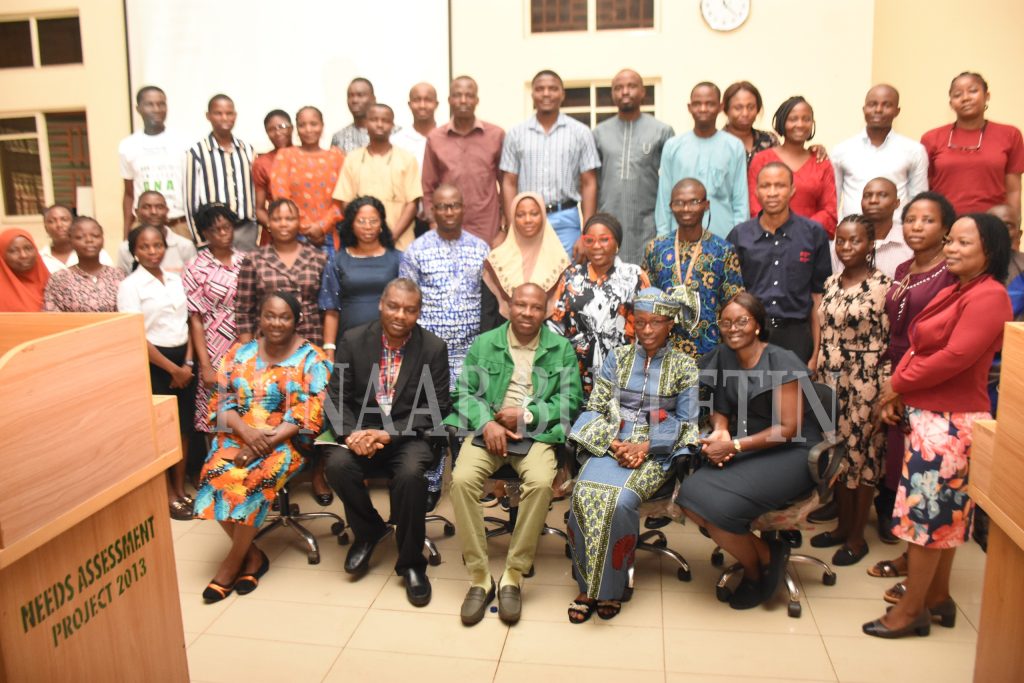
Dr. Adenaike outlined major areas of bioinformatics, including genomics, transcriptomics, proteomics, metabolomics, epigenomics, and metagenomics, with emphasis on metagenomics, which studies microbial communities directly from their environments.
He concluded by stressing that proper sequence submission, validation, and analysis are critical for credible, reproducible, and internationally accepted scientific research outcomes.