Last Updated on November 23, 2026 by Olasunkanmi Olajide
By Raymond Osemene
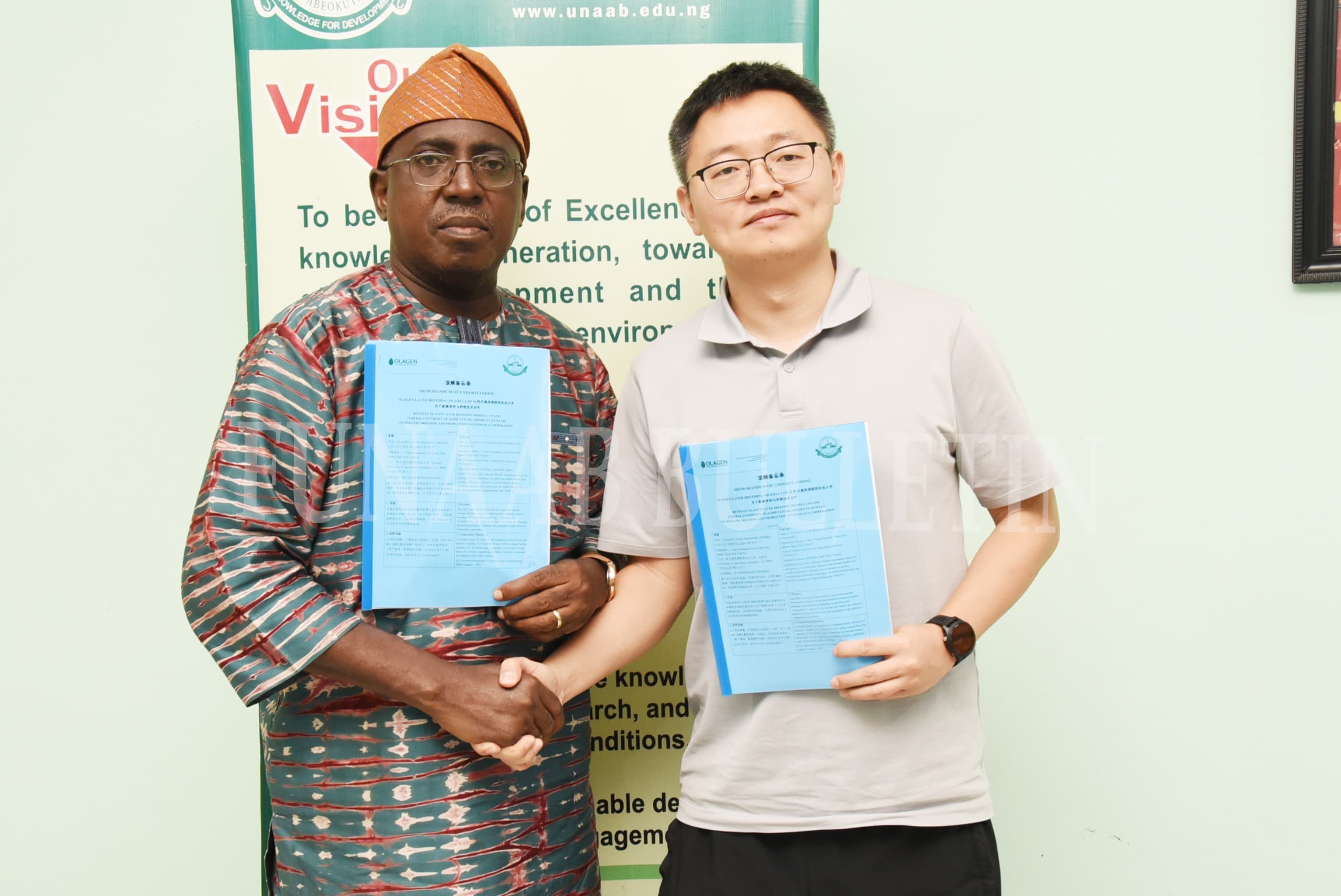
The Federal University of Agriculture, Abeokuta (FUNAAB), has signed a strategic Memorandum of Understanding (MoU) with Chinese agricultural investors for the establishment of an integrated commercial poultry farm and hatchery complex on seven hectares of land within the University, in a move expected to strengthen Nigeria’s poultry industry, boost food production and create employment opportunities.
The agreement, signed today, November 19, 2026, with Olagen Layer Breeding (Nig) Ltd, marked a significant milestone in FUNAAB’s drive to deepen industry-academia collaboration, attract strategic investments into agriculture and promote the application of modern agricultural technologies to address Nigeria’s food security challenges.
The project is conceived to accommodate an integrated poultry production and hatchery facility with an annual hatching capacity of between three and eight million eggs. The proposed complex would comprise two brooder houses, three layer houses, incubation facilities, a warehouse and an administrative office building, with full commissioning targeted for August 1, 2027.
The partnership followed initial working visits to FUNAAB by the prospective investors on September 22 and October 20, 2026, during which discussions centred on land cooperation, investment opportunities, project implementation and the development of a mutually beneficial relationship between the University and the Chinese firm.

Speaking at the signing ceremony, the Vice-Chancellor, Prof. Babatunde Kehinde, described the partnership as an opportunity to advance agricultural development, strengthen food security and promote sustainable investments in the poultry subsector. He stressed that the University’s interest in such collaborations transcended financial gains, noting that institutional integrity, reputation and statutory responsibilities remained fundamental to every partnership.
Prof. Kehinde explained that the investment would cover the production of day-old chicks, as well as the rearing of layers and broilers, while creating opportunities for practical training, collaborative research and the exchange of technical expertise between the University and industry practitioners.
He stated that students would benefit from hands-on exposure to modern commercial poultry production systems, while researchers would have opportunities to work with industry experts in developing innovative and practical solutions to challenges confronting the poultry industry.
The Vice-Chancellor further assured that FUNAAB would not enter into agreements capable of compromising its institutional interests or violating established regulations. He clarified that the University’s land and other assets remained protected, stressing that the project would operate under a clearly defined contractual arrangement that neither transfers ownership of the land nor permits it to be used as collateral or mortgaged.
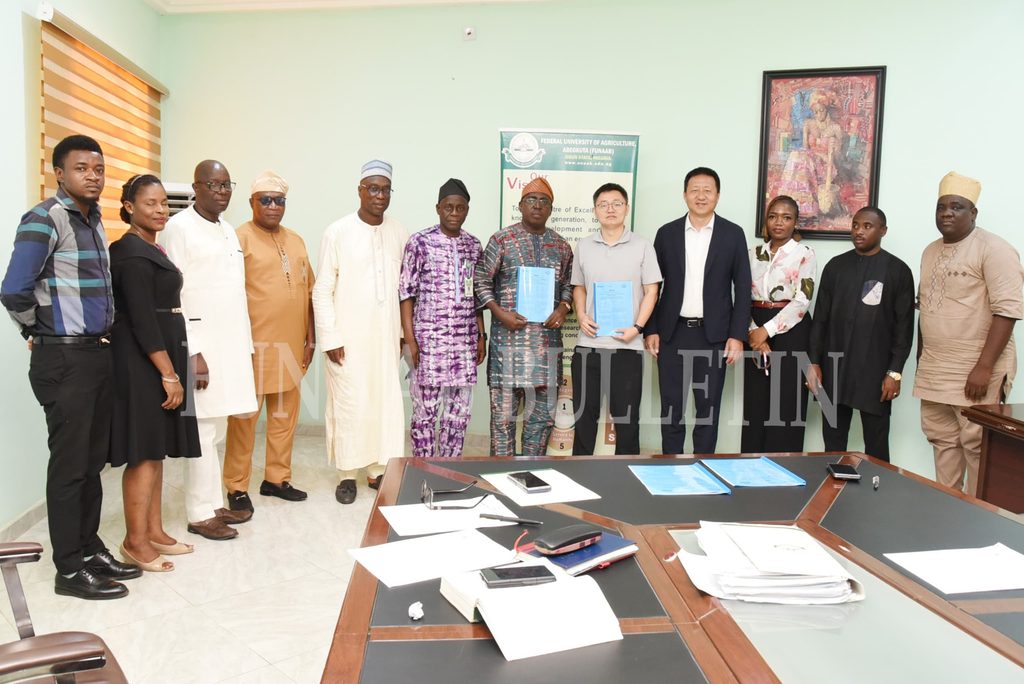
According to him, a 15-year lease arrangement, renewable at five-year intervals, would provide the necessary legal and operational framework for the project, while ensuring that the interests of both parties were adequately protected. He also drew lessons from previous property development arrangements, noting the importance of clear terms and conditions in preventing future disputes.
Earlier, the Chief Executive Officer of Olagen Layer Breeding (Nig) Ltd and leader of the Chinese delegation, Mr Sigin Wei, commended FUNAAB for its transparency and professionalism during the negotiations, noting that a legally secure and mutually acceptable arrangement was essential before committing substantial investment to the project.
Mr Wei explained that the proposed investment would involve considerable capital expenditure on poultry farmhouses, hatchery infrastructure, modern equipment and other essential facilities, expressing confidence in the partnership’s potential to contribute to the development of Nigeria’s poultry industry.
The seven-hectare project is expected to serve not only as a commercial poultry production hub but also as a platform for experiential learning, industry-driven research, technology transfer and capacity development, with significant implications for Nigeria’s poultry value chain and agricultural economy.
As Nigeria continues to grapple with the high cost of food production, poultry input constraints, unemployment and the need to strengthen domestic food supply systems, the FUNAAB-Chinese investment partnership presents a compelling model for universities, investors and governments to translate agricultural knowledge into commercially viable enterprises that deliver tangible benefits to society.
#SDG2, #SDG4, #SDG17