
Last Updated on October 23, 2026 by Olasunkanmi Olajide
By Olatoye Sanusi
The Federal University of Agriculture, Abeokuta (FUNAAB), has institutionalised vocational and entrepreneurial training for 100 and 200 Level students, with classes scheduled to commence in two weeks, as part of efforts to equip undergraduates with practical skills, promote self-reliance and prepare them for life beyond the classroom.
This is to ensure that students acquire marketable vocational skills and entrepreneurial competencies alongside their academic qualifications, empowering them to create businesses, generate employment and contribute meaningfully to national development.
Speaking on the development at a meeting held with Skill Leaders on October 16, 2026, the Director of the Centre for Entrepreneurial Studies (CENTS), Prof. Sakiru Akinbode, explained that the initiative marked a significant shift from the previous arrangement, under which practical vocational training was largely conducted during the second semester for 200 Level students, while additional optional holiday programmes attracted separate fees.
He noted that upon assuming office, he identified the institutionalisation of vocational and entrepreneurial education as one of his cardinal objectives, disclosing that, with the support of relevant University authorities, including the Deputy Vice-Chancellor in charge of Development, Prof. Olawale Dairo, he successfully championed the initiative and secured approval to integrate vocational training into the students’ educational experience.

Under the new arrangement, both 100 and 200 Level students would undergo vocational training, with the programme structured to provide progressive learning and skill acquisition. The existing university-wide practical training course for 200-Level students would also be retained to complement the expanded programme.
He explained that the revised structure would enable students to progress from foundational vocational skills at the 100 Level to more advanced techniques and entrepreneurial applications at the 200 Level, rather than repeat previously taught content.
According to him, trainers are expected to introduce value-added learning in their respective fields, incorporating improved production methods, emerging innovations, product development, marketing strategies and other contemporary practices relevant to their areas of specialisation.
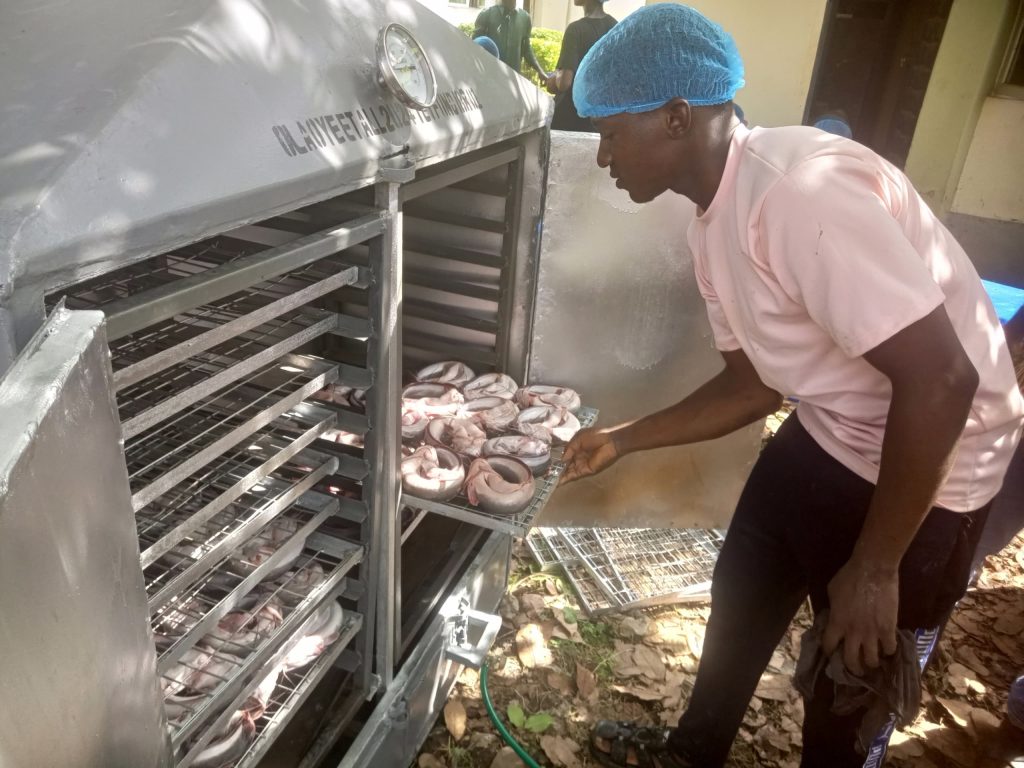
For instance, students introduced to soap-making and other vocational activities would have opportunities to advance their production techniques, improve product quality and learn how to market their products effectively. The objective was to ensure that the training remains practical, progressive and responsive to changing industry demands.
Prof. Akinbode further stressed the importance of cultivating independence, creativity and a sense of responsibility among undergraduates, noting that entrepreneurial education should prepare students to identify opportunities, solve problems and establish viable enterprises rather than depend solely on paid employment after graduation.
He expressed optimism that the initiative would strengthen FUNAAB’s commitment to producing graduates who are not only academically sound but also innovative, practically skilled and capable of creating employment for themselves and others.
#SDG1, #SDG4, #SDG8