Last Updated on November 24, 2026 by Olasunkanmi Olajide
By Olasunkanmi Olajide, Raymond Osemene & Esther Babatunde
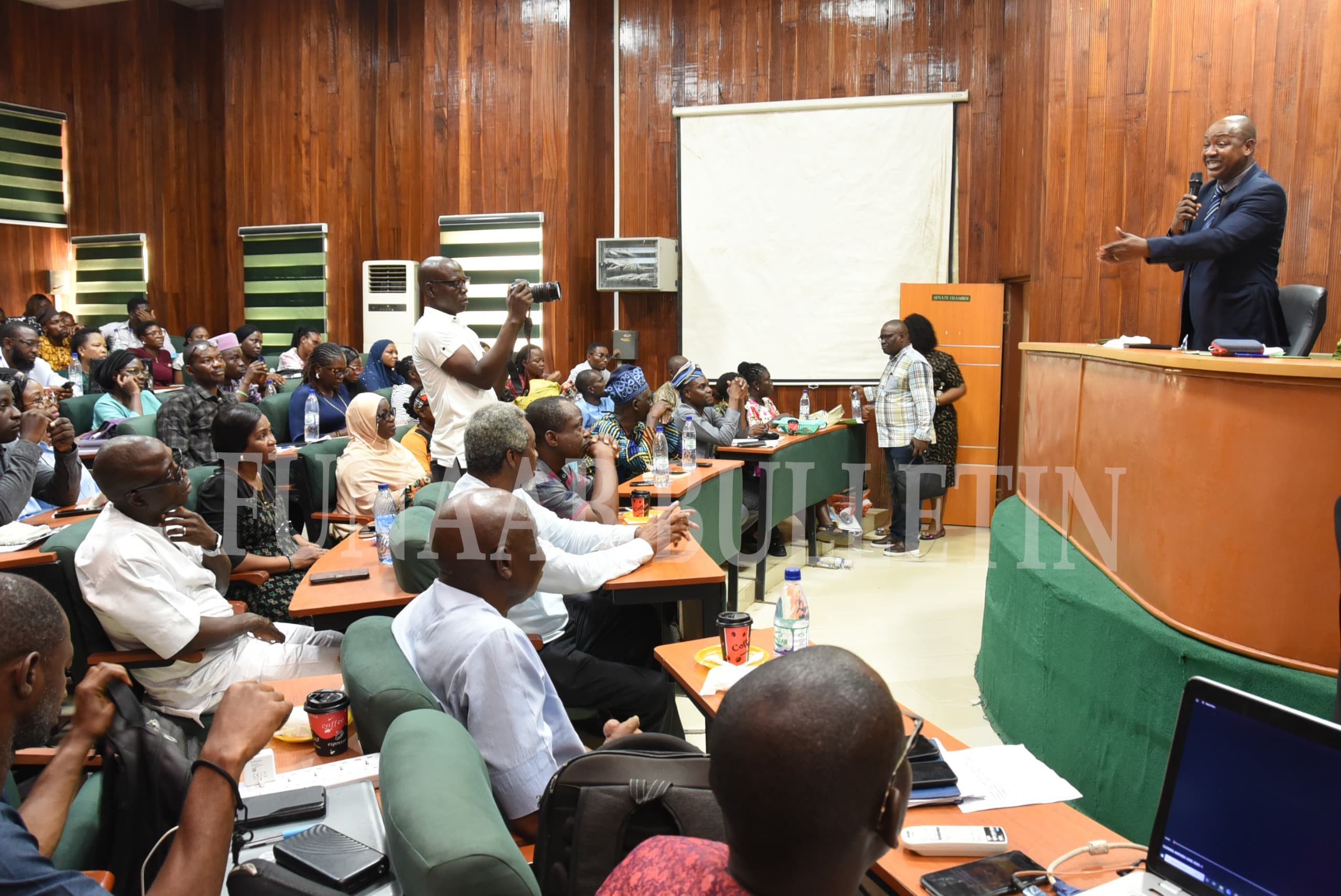
The Federal University of Agriculture, Abeokuta (FUNAAB), has intensified efforts to promote entrepreneurship, innovation and graduate self-reliance with the commencement of a Workshop on Capacity Building for Teaching Entrepreneurship in FUNAAB, aimed at equipping lecturers with skills to nurture entrepreneurial mindsets and business development among students.
The Two-Day Capacity-Building programme, organised by the University’s Centre for Entrepreneurial Studies (CENTS), commenced today, November 23, 2026, to prepare Academic staff to deliver entrepreneurship training across Colleges and Departments, ultimately empowering graduates to create jobs, develop innovative products and establish sustainable businesses.

Declaring the workshop open, the Vice-Chancellor, Prof. Babatunde Kehinde, represented by the Deputy Vice-Chancellor (Development), Prof. Olawale Dairo, described the initiative as a strategic investment in translating the University’s academic expertise into practical innovation, enterprise development and agricultural business opportunities. He stressed the need to bridge classroom learning with real-world innovation by encouraging students to identify opportunities, develop creative solutions and transform ideas into viable enterprises.

Speaking also, the Deputy Vice-Chancellor (Academic), Prof. Olusegun Idowu, commended the Vice-Chancellor’s purposeful and innovative leadership, noting that the initiative would enrich teaching and learning through creativity, innovation and enterprise-driven education. He urged CENTS to sustain its commitment to entrepreneurship education in response to evolving global economic and technological realities.
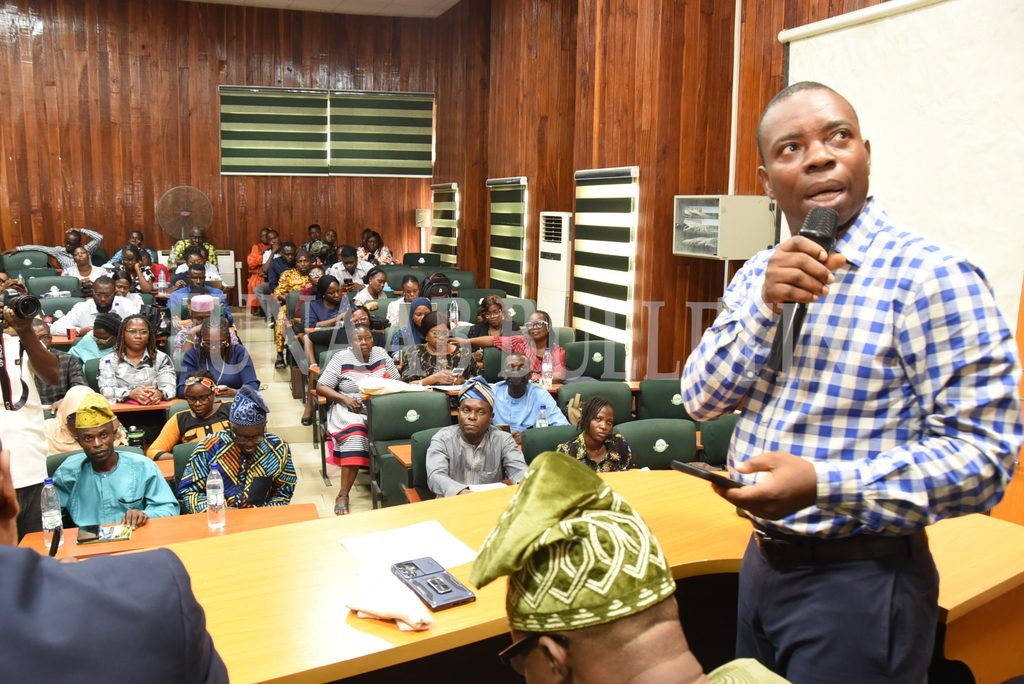
Earlier, the Director, CENTS, Prof. Sakiru Akinbode, appreciated the University Management for its continued support, stressing that entrepreneurship education must become an integral component of academic training across disciplines, including Plant Science, Animal Science, Engineering, Environmental Resources, Computing, Physical Sciences, Biosciences and Management Sciences, among others.

Prof. Akinbode urged participating lecturers to become ambassadors of entrepreneurship education and catalysts for change in their Colleges and Departments by organising step-down training and adapting the modules to their disciplines. He noted that effective knowledge transfer could empower thousands of students to identify business opportunities, develop innovative ideas and commercialise their solutions.

He disclosed that entrepreneurship training was already being implemented for 100-Level and 200-Level students across six Colleges, with classes scheduled for Wednesdays and Thursdays, while the vocational component featured approximately 24 practical skill areas. Plans are also underway to extend the programme to 100-Level students in the remaining five Colleges from the second week of the second semester.

Speaking on the training framework, the Technical Coordinator of Inspire, Create, Start and Scale (ICSS), Prof. Iyabode Kehinde, said the workshop would focus on the Inspire and Create modules, designed to equip lecturers with practical and structured approaches to entrepreneurship training. She explained that the Inspire module would run for 10 days, comprising physical and online sessions, while the Create module would feature a 10-day combination of physical and virtual engagements.

According to her, the Inspire module would expose participants to self-discovery, personal development, employability, economic opportunities and career choices, while the Create module would focus on entrepreneurial ideation, business model development and prototyping.
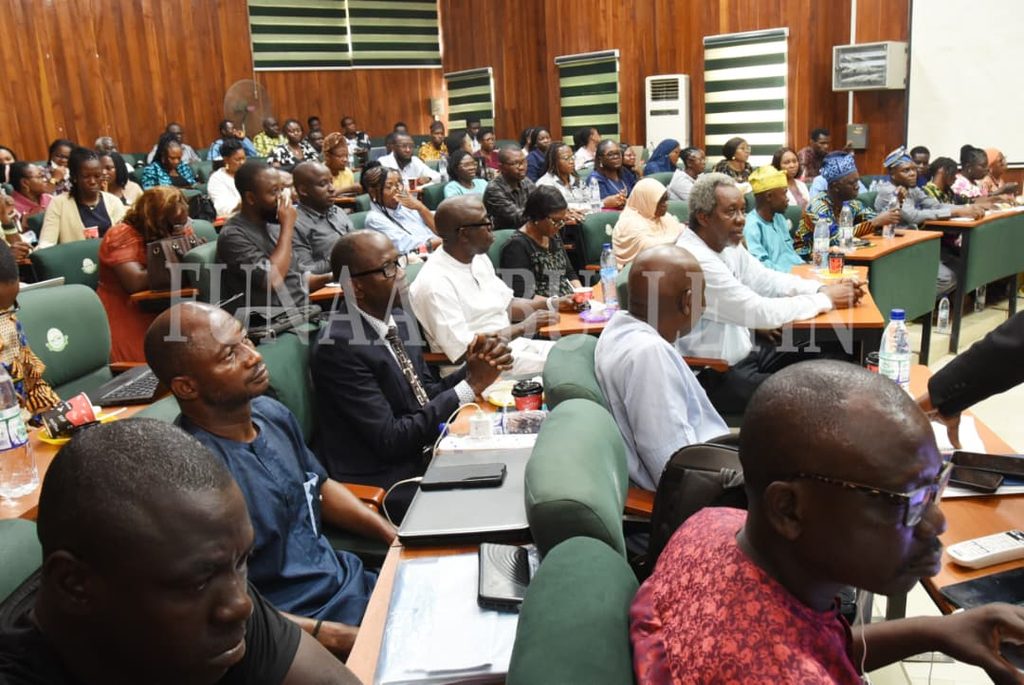
In a Goodwill Message, the Chairman, Committee of Deans and Directors (CODAD), Prof. Emmanuel Fakoya, described the workshop as timely, noting that academic qualifications alone were insufficient to prepare graduates for a rapidly evolving world. He emphasised the need for practical competencies, creativity, innovation and critical thinking, adding that entrepreneurship education would position graduates to contribute meaningfully to economic growth and development.

Former Directors of CENTS, Professors Adewale Dipeolu, Festus Adeosun and Emily Ayo-John, commended the initiative and the Centre’s current leadership, urging participants to translate the training into tangible entrepreneurial outcomes among students. They also acknowledged the contributions of past Directors, stakeholders and the Vice-Chancellor, whose leadership, commitment and institutional support had helped actualise the programme.
#SDG1, #SDG8