Last Updated on June 10, 2026 by Olasunkanmi Olajide
By Olasunkanmi Olajide
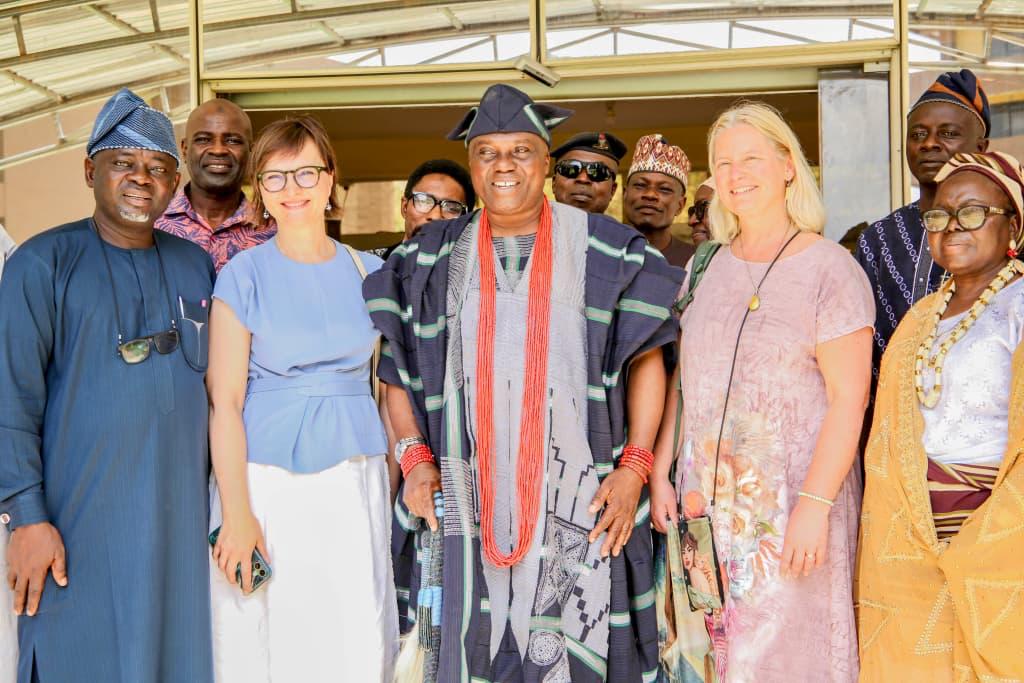
The Pro-Chancellor and Chairman of the Governing Council of the Federal University of Agriculture, Abeokuta (FUNAAB), and the Aragbiji of Iragbiji Land, HRM, Oba Rasheed Ayotunde Olabomi, Odundun IV, Asoludero has called for a radical transformation of Nigeria’s higher education system, urging universities to move beyond certificate production and become active drivers of innovation, industrialisation, entrepreneurship and national economic development.
Delivering the Keynote Address at the 2026 University of Ilorin Research and Industrial Summit (UIRIS), themed “Advancing University–Industry Collaboration for Sustainable National Development in Nigeria,” the highly revered monarch emphasised that innovation remains the most potent tool for the development of Small and Medium Enterprises (SMEs), which constitute the backbone of Nigeria’s economy.
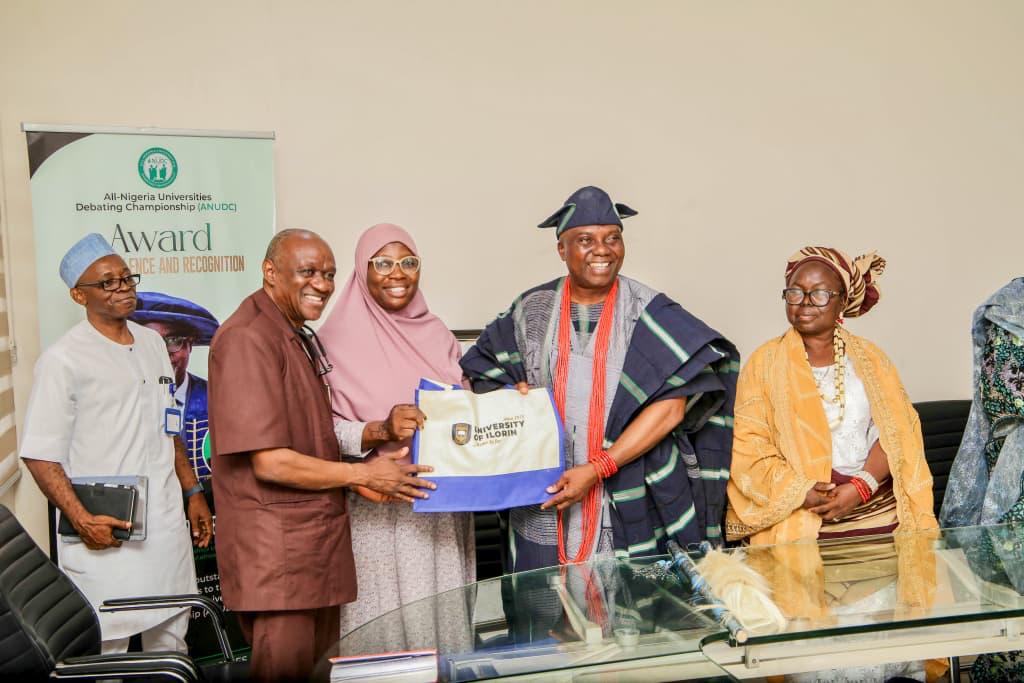
Speaking before academics, industry leaders, policymakers, researchers and students, Oba Olabomi described the summit as a strategic national intervention capable of reshaping Nigeria’s economic future through stronger collaboration among universities, industries and government institutions. According to him, Nigeria’s greatest challenge is not the absence of talent or resources but the inability to convert research outputs into commercial products, technologies and enterprises capable of driving economic growth.
“Nigeria must stop seeing universities as factories for certificates and begin to see them as centres for problem-solving, innovation and enterprise development,” he said.
The Royal Father noted that while SMEs account for about 96 percent of businesses in Nigeria and contribute significantly to employment generation, many remain constrained by poor technological adoption, inadequate research support, weak innovation ecosystems and limited access to modern production systems. He argued that the solution lies in building a robust innovation ecosystem where universities, industries and government agencies work together to commercialise research, support entrepreneurship and stimulate industrial growth.
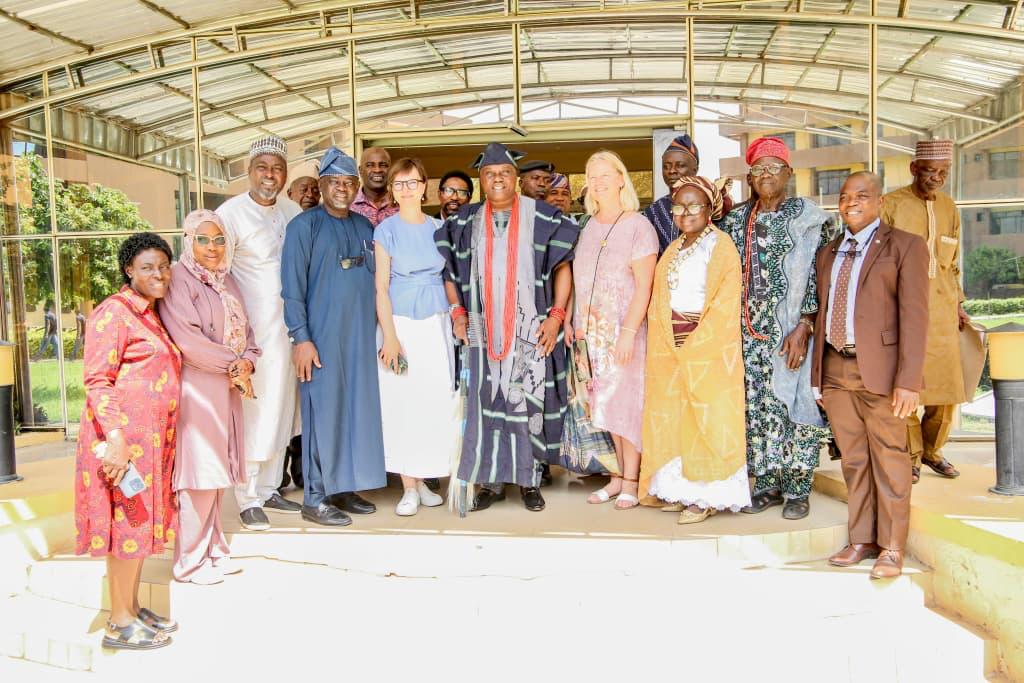
Drawing from global examples, Oba Olabomi cited the role of Stanford University in the emergence of Silicon Valley, South Korea’s Korea Advanced Institute of Science and Technology (KAIST) in the country’s technological transformation, Germany’s dual education model and India’s technology-driven SME revolution as evidence that universities can serve as powerful catalysts for economic development.
He stressed that countries such as the United States, China, Germany, South Korea and Singapore achieved global competitiveness through deliberate investments in research, innovation and university-industry partnerships. The monarch challenged Nigerian universities to establish technology transfer offices, innovation hubs, entrepreneurship accelerators, product development centres and research commercialisation units that can support local industries and SMEs. He further advocated stronger government intervention through increased research funding, innovation grants, startup financing, tax incentives for research-supporting industries, digital infrastructure development and stronger intellectual property protection.

Oba Olabomi expressed concern that thousands of valuable research findings generated in Nigerian universities remain abandoned on library shelves, while industries continue to depend heavily on imported technologies and foreign expertise.
“A nation that imports everything cannot sustainably develop. Research without commercialisation remains incomplete, while knowledge without societal impact remains underutilised,” he stated.
The keynote speaker also underscored the opportunities presented by the Fourth Industrial Revolution, highlighting Artificial Intelligence, robotics, biotechnology, renewable energy, advanced manufacturing, blockchain technology and data analytics as critical areas where Nigerian universities and SMEs must invest to remain globally competitive. He called for the integration of entrepreneurship education into university curricula, insisting that graduates must be equipped not only with academic qualifications but also with innovation, business and problem-solving skills capable of creating jobs and wealth.

The Royal Father further urged policymakers to align innovation strategies with sustainable development objectives, encouraging universities and SMEs to collaborate on climate-smart agriculture, renewable energy technologies, waste-to-energy solutions, sustainable manufacturing and digital climate monitoring systems.
According to him, innovation-driven SMEs possess enormous potential to address youth unemployment, poverty and economic exclusion, particularly in a country where more than 70 per cent of the population is under the age of 35. He noted that Nigeria’s future prosperity would depend largely on its ability to harness research, technology and entrepreneurship to build a knowledge-based economy.

Looking ahead, Oba Olabomi painted a vision of a Nigeria where universities drive industrial production, research generates globally competitive technologies, students create successful startups, local industries rely on indigenous innovations and youth unemployment is drastically reduced. He challenged the University of Ilorin and other tertiary institutions to become national models for innovation-led development by strengthening collaborations with industry, government and international partners. “The future of Nigeria cannot be built on consumption alone. It must be built on innovation, research, entrepreneurship and industrial productivity,” he declared.
Earlier in his Opening Remarks, the Vice-Chancellor of the University of Ilorin, Prof. Wahab Olasupo Egbewole, SAN, described the summit as a strategic platform designed to bridge the long-standing gap between research outputs and industrial application in Nigeria. He noted that universities must play a central role in driving national development through innovation, technology transfer and enterprise creation. According to him, the University of Ilorin remains committed to fostering impactful collaborations among academia, industry and government to ensure that research findings translate into practical solutions that address societal challenges, stimulate economic growth and enhance Nigeria’s global competitiveness.
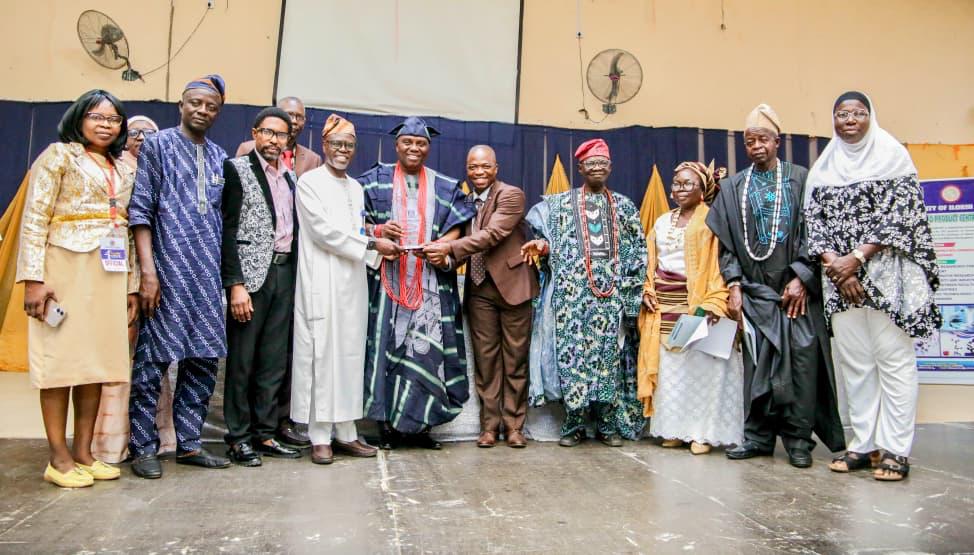
The Vice-Chancellor further emphasised that the summit aligns with the institution’s vision of promoting excellence in research, innovation and community impact while creating opportunities for students, researchers and entrepreneurs to contribute meaningfully to national development.
Meanwhile, the 4-Day Summit, organised by the University of Ilorin’s Centre for Laboratory to Product (LABTOP) in collaboration with the Centre for Research Development and In-House Training (CREDIT), the Technical and Entrepreneurship Centre (TEC) and FETICON 2026, featured research exhibitions, technology innovation challenges, students’ colloquia and discussions on strengthening collaboration among academia, industry and government for sustainable national development.
Participants agreed that accelerating Nigeria’s economic transformation would require deliberate investments in research commercialisation, technology development, entrepreneurship and stronger partnerships between universities and industry.